The phrase “it never rains, but it pours” can be especially troubling when it comes to stormwater and its effects on our sanitary sewer system.
With all the wet weather we’ve been having recently, last summer’s drought seems like a distant memory. A moderate amount of rain is good for our lawns and for our water supply, but sudden and intense periods of rainfall can lead to overflows.
These overflows happen when stormwater gets into our sanitary sewer system through inflow and infiltration (I&I)—either through cracks in the pipes (inflow) or through damaged manholes, service lines or mainlines (infiltration). The excess water then spills out of the system, like water spilling over the edge of a cup that’s been placed under a running faucet.
These types of spills happen from time to time in any system, with particularly heavy rainfall causing larger spills—like the two back-to-back spills that occurred in late January, the same time that the Guadalupe River flooded.
Ultimately, these spills did not cause any issues for residents, since they were contained to the roadways and ditches. Still, we need to address the vulnerabilities in our system so that we can cut down on the resources needed to address these spills and reduce the need for additional treatment at our wastewater plant.
Last year, the City began an inflow and infiltration study to help identify sources of I&I in our sanitary sewer system so we can prioritize repairs and improvements. Our consultant, RJN Group, conducted flow monitoring throughout Victoria to find the areas with the highest levels of inflow and infiltration.
Next, the consultant took a closer look at the problem areas through televising and smoke testing. Televising is the process of inserting cameras into pipelines to look for defects. Smoke testing involves letting harmless smoke pass through a pipe and observing whether it escapes through any cracks or open cleanouts.
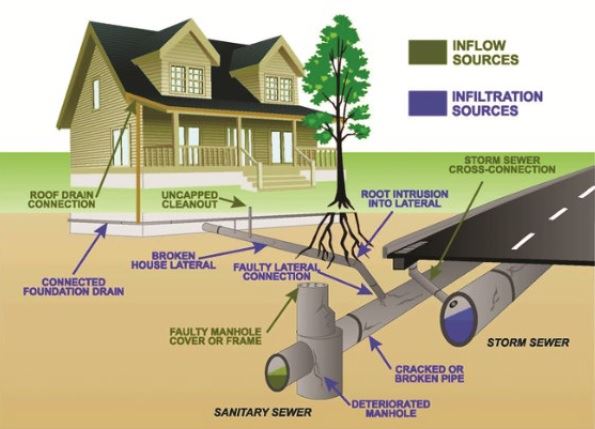 During the March 1 City Council quarterly workshop, RJN Group presented the findings of the inflow and infiltration study. The consultant provided a list of vulnerabilities in the system, with priority rankings assigned to each.
As part of the study, the consultant also looked at the locations and capacities of our lines to determine whether any of them should be abandoned altogether. If a damaged line is causing frequent overflows and isn’t contributing anything to the system, we may consider abandoning it.
With this information in hand, the next step will be to schedule repairs and improvements through the City’s capital improvement program. This will be a long-term process, so we ask that residents be patient as we address our highest-priority areas first.
Of course, inflow and infiltration are not the only factors that can cause a sanitary system to overflow. For example, a failure at a lift station can interrupt the flow of the system, or the pipes can become clogged by certain types of waste (which is why grease traps and other waste disposal methods are so important). Going forward, we will continue to address those areas that we can control so we can protect our system from preventable overflows.
To view the full March 1 presentation by RJN Group and Public Works, visit www.victoriatx.gov/tv15 or visit Victoria Texas Public Meetings on YouTube.
Ken Gill is the director of Public Works for the City of Victoria.